


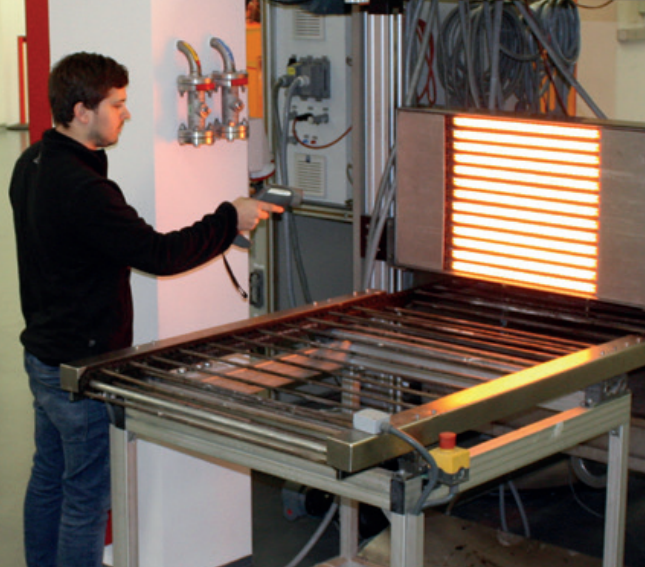
Keeping Your Clean Room IR Lamps Safe (and Your Breakers Happy)
When you’re working in a clean room, the last thing you need is a surprise. No contamination, no electrical glitches, and definitely no tripped breakers that shut down the whole facility. We build our infrared lamps to give you that exact, steady heat you need, but the real work happens behind the scenes with the electrical insulation. One tiny arc-over or a bit of leakage current? That’s all it takes to turn a productive day into a nightmare.
Why we test every single tube
Some companies just test a few samples from a batch and hope for the best. We don’t do that. Every single lamp tube we make goes through a full dielectric withstand and insulation resistance test before it even thinks about leaving our shop. We basically put the insulation under high-voltage stress to hunt for any pinholes or weak spots in the quartz and ceramics. If a tube leaks current during the test, it goes in the scrap bin. Period. It’s a lot of work, but it beats having a lamp burn out during your first few hours of operation.
Dealing with high voltage
To get the right balance of heat and energy, these lamps run at some pretty specific voltages. The tricky part is “electrical tracking”—that’s when current decides to crawl across the surface of the insulator. To stop that, we stick to high-purity materials that keep the resistance where it needs to be. But here is the thing: the lamp is only half the battle. You’ve got to make sure your own wiring and connectors are up to the task. If you use undersized wires or leave a terminal loose, you’ll get heat spots. That’s a shortcut to killing your lamp’s lifespan.
The reality check
Now, look—rigorous testing is great, but it doesn’t make these lamps invincible. High-wattage IR lamps put out an intense amount of heat. Over time, that heat can actually dry out the insulation on your cables. To avoid this, be smart about your cable routing. Keep those power leads out of the direct line of fire. And a quick tip: check your cooling system. If it can’t handle the ambient heat load, your connectors will eventually fail, no matter how perfect the lamp was when it left our factory.