



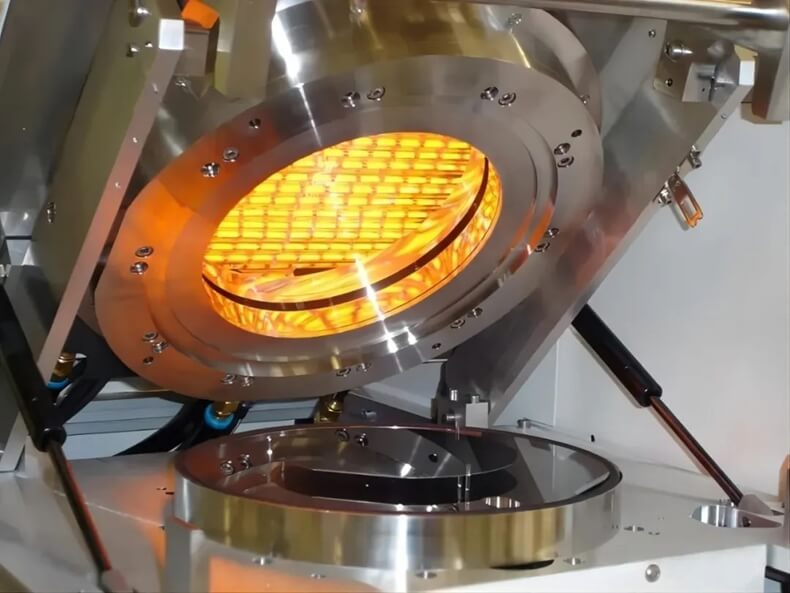
Stop Letting Burst Lamps Kill Your Yield
If you’re working with carbon nanotube (CNT) fabrication, you know the drill. You need extreme thermal precision. But when you’re pushing high-load production, there’s a nightmare scenario we all dread: an infrared lamp bursting. It’s not just about the downtime. When a quartz tube shatters, it basically rains glass shards and metallic debris all over your wafers. In a cleanroom, that’s a disaster. One pop and your entire batch is trash. Why do they blow? Usually, it comes down to thermal shock or a few nasty hotspots. This happens a lot when we push power density to the limit just to get those rapid ramp-up times. Maybe there’s a tiny, invisible flaw in the quartz, or maybe the voltage spikes. Either way, the glass gives up. In a basic setup, the tube explodes outward, sending everything straight onto your substrate. A better way to handle it We decided to stop playing Russian Roulette with our wafers. The fix is pretty simple: we put a physical barrier in the way. We house each heater inside a high-purity quartz sleeve or a shielding jacket. Think of it like a safety windshield. If the inner lamp pops, the outer sleeve catches all the fragments. The debris stays put. Your wafers stay clean. We also use specific sealants at the end-caps so nothing sneaks through the housing. It turns a potential catastrophe into a boring, five-minute maintenance swap. The honest trade-offs Now, nothing is free. Adding that protective sleeve does block a little bit of the infrared transmission. You’ll notice a small dip in raw heat flux compared to using a bare lamp. You’ll probably need to bump up your power settings or add a bit more dwell time to make up for it. But honestly? That’s a tiny price to pay to avoid scrapping a whole run of wafers. One last tip: keep an eye on your cooling fans. That shielding jacket traps some heat around the ends of the lamp, so make sure your airflow is strong enough to keep the connectors from getting too hot.