



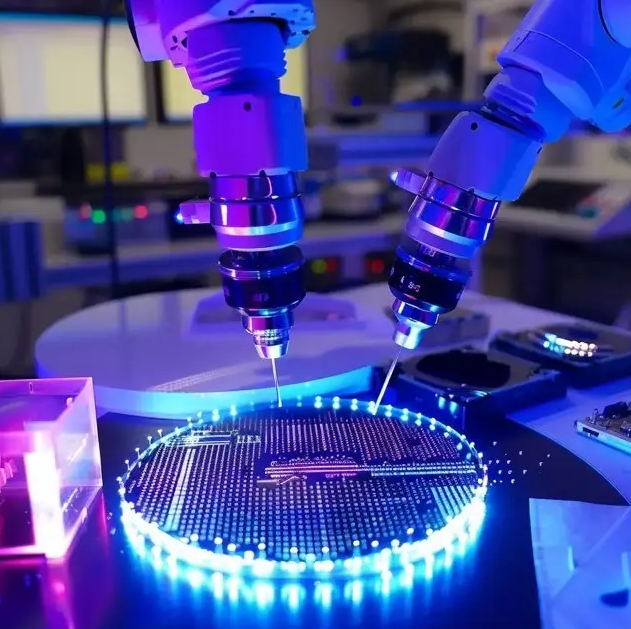
Keeping Your Class 100 Cleanroom Actually Clean
When you’re working in semiconductor fab, “temperature control” is only half the battle. The real nightmare? Contamination. In a Class 100 environment, one tiny flake of polymer or a single speck of dust is enough to wreck your wafer yield and send your day spiraling. That’s why we don’t just throw any heater in there. We use a specific combo of high-purity quartz IR lamps and Teflon-insulated wiring. Here is why that actually matters. The deal with high-purity quartz Most quartz lamps have metallic impurities. At high heat, those impurities can leach out. For a semiconductor process, that’s a disaster. We use synthetic, high-purity quartz to stop that from happening. These lamps use short-wave infrared radiation, which means they beam energy straight into the substrate. They don’t waste time heating up the air around them. This is huge because it cuts down on those convection currents that usually kick up dust from the floor. Why the wiring is where most people mess up Here is the thing: the wiring is usually the first thing to fail. If you use standard PVC or silicone jackets, they start to “smoke” once they get hot. They release volatile organic compounds (VOCs) that drift right onto your silicon. It’s a mess. We use Teflon (PTFE) for the lead wires instead. It stays rock-solid at high temperatures and doesn’t outgas. It’s chemically inert, so whether you’re in a vacuum or a high-heat zone, you can just set it and forget it. No leaching. No surprises. A few things to keep in mind These lamps pack a lot of heat into a tiny space. It’s efficient, but it means you have to watch your mounting brackets. If your cooling system can’t handle the ambient heat soak, you might see your lamp housing start to warp. We designed these to be easy drop-in replacements for the heaters you’re already using. You get a source that doesn’t spit out particles and hits your target temps fast. Just double-check that your power supply matches the lamp’s wattage. If you don’t, you’ll burn out the filament way sooner than you should.