


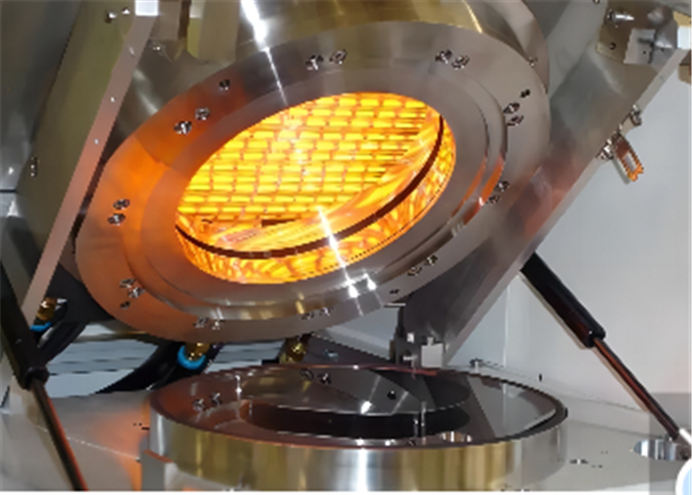
On the fab floor, a 0.5°C swing during photoresist bake is enough to shift linewidth by nanometers—and turn a good lot into scrap. Temperature stability isn’t a preference; it’s the process itself. We built our heaters for that reality, hitting wafer-level thermal uniformity within ±0.1°C across 150 mm and 200 mm substrates. What matters under the hood We pair short-wave halogen and NIR emitters with quartz reflectors to put the energy where it needs to be, keeping thermal mass low and response tight. Temperature repeatability comes in at ±0.5°C across setpoints from 90°C to 250°C, so soft bake and hard bake profiles run without overshoot. Cleanroom Class 1–100 compatibility comes from ultra-low outgassing materials, sealed junctions, and zero particle generation during thermal cycling. Output holds steady over 5,000+ hours, with less than 5% intensity drift. Here’s why this matters in lithography and photoresist processing: the thermal budget is unforgiving. Our heaters keep profile integrity lot after lot, which cuts linewidth variation and keeps rework down. Fast ramp-up shortens cycle time, and the precision trims energy use by avoiding over-compensation. Reliability shows up as fewer unplanned interventions—and consistent particle counts on the wafer. A few practical notes. These heaters need matched power supplies and calibrated pyrometers to close the loop. Dropping them into legacy tracks can call for minor mechanical tweaks and updated recipe setpoints. Plan for cleanroom-compatible mounting, and make sure your thermal budget includes the emitter aging curve—we provide the curve data so you can keep the process in control.