


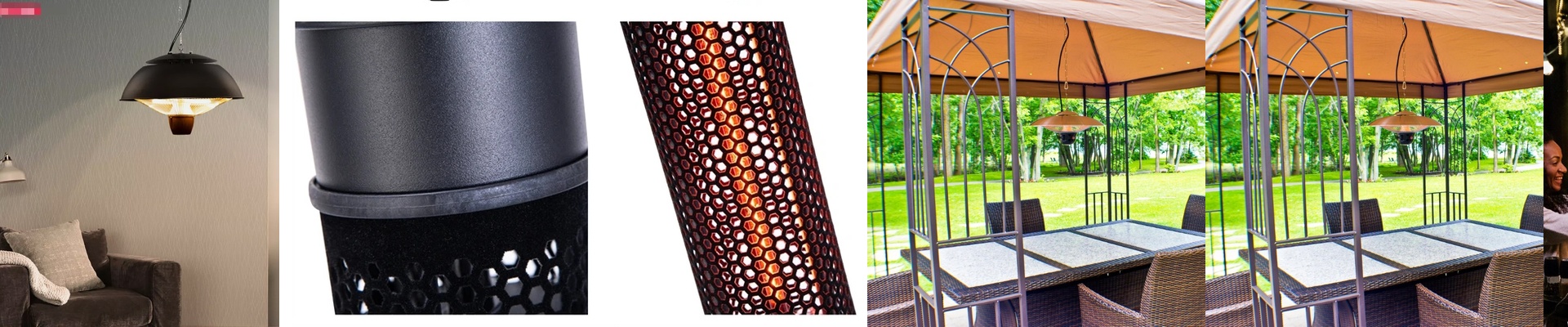


Municipal budgets take a beating every winter when big public buildings—libraries, community centers, administrative offices—run traditional forced-air systems. The bills pile up fast, and people still complain about drafts and uneven warmth. Swap in outdoor electric heaters, specifically infrared models, and the whole equation shifts.
What matters, technically
Infrared electric heaters deliver radiant heat, warming people and solid surfaces directly instead of heating the air. In the field, that means a 1.5–3 kW unit can keep comfort levels up in high-traffic entryways, lobbies, and covered outdoor queues. The core is usually quartz tubes or carbon fiber elements that come up to temperature in seconds—minimal warm-up, immediate comfort. Most commercial-grade models run on standard voltage, plug in cleanly, and include thermostat control for steady, repeatable operation. Safety is built in with tip-over protection, protective grilles, and IP ratings matched to covered outdoor use.
Why it fits these buildings
Public buildings often spend energy heating empty air. Heat rises, drafts form, and thermostats chase comfort without ever catching it. Infrared outdoor electric heaters put heat where people feel it—at floor level and on occupants—so you can back the ambient thermostat down a few degrees without anyone noticing. That direct transfer cuts wasted energy and shaves consumption during peak winter months. Maintenance is simpler, too. With fewer moving parts than forced-air systems, there are fewer belts, motors, and filters to swap out, which shortens service calls and lowers spare parts costs. The payoff shows up as a clear, measurable drop in annual heating spend.
The practical details
Infrared warmth does its best work in drafty or semi-open spaces when the heaters are placed to cover the right footprint. Plan for even spacing and line-of-sight coverage, and size the units to the area—not the look you want. For fully exposed outdoor spots, go with higher IP ratings and consider wind shielding to keep the heat where it should be. Installation is straightforward, but load planning matters. Make sure the circuits and controls can handle the total demand.
매년 겨울, 도서관, 커뮤니티 센터, 행정 사무소 등 대형 공공건물이 기존의 강제 송풍 난방 시스템을 가동할 때 지방자치단체 예산이 크게 부담을 겪는다. 비용이 빠르게 누적되며, 내부에서는 여전히 외풍과 불균일한 온도에 대한 불만이 발생한다. 이때 야외용 전기히터, 특히 적외선 모델로 교체하면 상황이 완전히 달라진다.
기술적으로 중요한 점
적외선 전기히터는 복사열을 전달하여 공기를 가열하지 않고 사람과 고체 표면을 직접 데운다. 현장에서는 1.5~3 kW 용량의 장치가 출입구, 로비, 지붕이 설치된 야외 대기 공간과 같이 유동인구가 많은 곳에서 쾌적한 온도를 유지할 수 있다. 핵심 부품은 일반적으로 석영관 또는 탄소 섬유 요소로 구성되며, 몇 초 만에 온도에 도달해 예열 시간이 최소화되고 즉시 쾌적한 상태를 제공한다. 대부분의 상업용 모델은 표준 전압으로 작동하며, 플러그 연결이 간편하고 온도 조절기가 포함되어 있어 안정적이고 반복 가능한 운전이 가능하다. 안전성은 전도 방지, 보호 그릴, 그리고 지붕이 있는 야외 사용에 적합한 IP 등급으로 보장된다.
왜 이 건물에 적합한가
공공건물은 종종 비어 있는 공간의 공기만을 가열하는 데 에너지를 낭비한다. 열은 상승하고 외풍이 형성되며, 온도조절기는 쾌적함을 맞추려 하지만 효과적이지 못하다. 적외선 야외 전기히터는 사람이 직접 느끼는 위치인 바닥 근처와 점유자에게 열을 전달하므로, 주변 온도조절기의 설정 온도를 몇 도 낮춰도 사용자들이 체감하지 못한다. 이러한 직접 열 전달 방식은 에너지 낭비를 줄이고 겨울철 최대 부하 기간 동안 소비량을 감소시킨다.
유지보수도 간편하다. 강제 송풍 시스템에 비해 움직이는 부품이 적어 교체해야 할 벨트, 모터, 필터 수가 줄어들어 서비스 호출 횟수가 감소하고 예비 부품 비용도 절감된다. 그 결과 연간 난방비 지출의 명확하고 측정 가능한 감소로 이어진다.
실용적인 세부 사항
적외선 난방은 외풍이 있거나 반개방 공간에서 히터를 적절한 범위에 배치했을 때 효율이 가장 높다. 일정한 간격과 가시선 커버리지를 계획하고, 외관상의 이유가 아닌 공간 크기에 맞게 장치를 선정해야 한다. 완전히 노출된 야외 공간에서는 더 높은 IP 등급을 선택하고, 바람 차단 장치를 고려하여 열 손실을 줄여야 한다.
설치는 비교적 간단하지만 부하 계획이 중요하다. 회로와 제어 장치가 전체 전력 수요를 감당할 수 있는지 반드시 확인해야 한다.